|
|
Perth Burns Club |
|
| | home | about | committee | presidents | constitution | syllabus | membership | | |
| | annual dinners | st andrew's days | schools festivals | summer outings | | |
| | immortal memories | book library | video gallery | burns in perth | links | contact | |
St Andrew's Day
A day of Scottish life and culture
| 2025 | 2024 | 2023 | 2022 | 2021 | 2019 | 2018 | 2017 | 2016 | 2015 | 2014 | 2013 | 2012 | 2011 | 2010 | 2009 | 2008 |
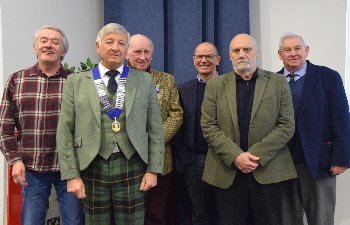
Presenters and officials gather beforehand. Left to right: Gerry Cairns, President Joe Giacopazzi, Donald Paton, MSP Jim Fairlie, Bruce Keith, Lachie Munro. Piper Martin Bristow played in the sizeable audience of around 40.
Perth's main celebration of St Andrew's Day, the twenty-first Perth Burns Club's annual Day of Scottish Life and Culture, was held in the Soutar Theatre at the A. K. Bell Library, York Place, Perth, on Saturday, November 29th, 2025.
As ever, the event maintained its reputation for high quality, and the audience was treated to a thoroughly entertaining and diverse programme.
Elliott Boyle introduced local MSP Jim Fairlie who praised the event for celebrating all things distinctively Scottish.
Donald Paton provided a short introduction for President Joe Giacopazzi, who had worked in insurance for 5 years before moving to run the family deli business based in Milnathort. Joe welcomed PBC members, visitors and speakers, and looked forward to maintaining the customary high quality of entertainment provided by the event.
Principal Speakers
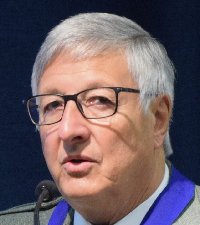
Joe Giacopazzi
Joe's subject was Thomas Cochrane, a Scottish seafarer who made his mark in the Napoleonic Wars, and eventually gained the rank of admiral in his 80s.
Cochrane was born in Paisley in 1775, and raised in Culross. He joined the Army, but didn't do well there and switched to the Navy. He enlisted on the Hind and saw service in Norway and the Americas. He met Nelson in Naples.
In 1801 he was appointed captain of a brig/sloop with 80 men under his command. His style was unorthodox, aggressive and quick-witted - for example, fooling the Spanish by declaring he had plague on board. He tackled larger French and Spanish ships, and also ports, shore batteries and frigates. On land, he blew up Spanish roads and engaged with French troops. He was awarded a knighthood, but was undermined by jealous British luminaries.
He spent time adventuring around Chile, plundering Spanish gold, which eventually ended Spanish rule in that country. Some outrageous bluffing helped him win against the Spaniards in Brazil.
Cochrane eventually reached the rank of admiral in his 80s and became a favourite of Queen Victoria.
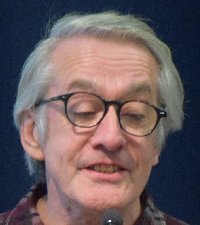
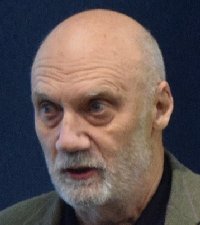
Gerry Cairns and Lachie Munro
There followed a double act by Gerry Cairns (secretary of the John McLean Society) and Lachie Munro (PhD History in Glasgow NLS). Their joint book, 'The Lion in Waiting' deals with competing visions of Scottish Nationhood 1707-1934.
Post-Prestonpans, there was no attempt to declare independence - Scotland was administered from London. Robert Burns was more accepting of the Union than Walter Scott.
James Grant (a cousin of Scott) was nationalist and formed the National Association for the Vindication of Scots Rights, railing against the exploitation of English rule. A revival of interest in Wallace (and Scottish nationhood) led to the ereection of the Wallace Monument in 1869.
The Scottish Home Rule Association (Michael Keir Hardie, Robert Cunninghame Graham) came into being in 1886, found an outlet with the Scottish Labour Party, and eventually merged with UK Labour.
The Young Scots was a Liberal organisation founded to oppose the Boer War, but was short-lived. The Scots National League, formed in London by Erskine of Marr, was another Scottish Home Rule Association, and mainly fought against overcrowding in Glasgow.
Tom Johnston, Rev Roland Muirhead, and Rev James Barr were leading figures behind the Scottish Home Rule Bill. The Scottish National Party was formed by Compton Mackenzie, Wendy Wood, the Duke of Montrose and Lord Beaverbrook. There was continued grievance about e.g. Scots war dead, but not in political representation. Sectarianism deflected from politica - e.g. mines were classified as Catholic and Protestant.
So, no big crusades to stir the nation during the period under review.
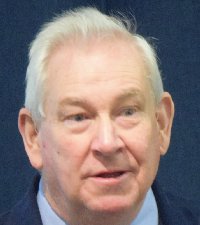
Bruce Keith
Our final speaker was Bruce Keith, a retired surveyor with Hydro Electric, who delivered an energetic and humerous presentation on the various wonders to be found under our feet across the length and breadth of Scotland. Audience participation was welcomed and many anecdotes were exchanged during Bruce's slide show and talk.
Bruce began with Skara Brae, the neolithic Orkney settlement buried by a sanddrift in 1694 and rediscovered after a storm in 1850. The advanced nature of housing, farming, crafts and community life are 'must-see' elements if you haven't been. A whistle-stop tour then followed, including:
- Edinburgh South Bridge vaults (populated by Irish settlers)
- Marischal College Aberdeen (spared by Hitler)
- Slate quarries (mainland and islands)
- Loch Katrine - Craigmaddie (Glasgow)
- Paisley Foul Water (polyphonic tunnel)
- Railway and road tunnels
- Fracking (Livingston)
- Secret Bunker (St Andrews)
- National Mining Museum (Newtongrange)
Bruce's enthusiasm for his subject and his anecdotes were much appreciated, and the audience were well pleased with his efforts.
Former president Alan Telfer brought an excellent afternoon's entertaiment to a close with a big round of thanks for the organisers, the speakers, and the appreciative and participative audience.
All photographs courtesy of
Elliott Boyle, Perth Burns Club.
Email Elliott if you'd like a copy of a photograph.